
‘Devo’ is an underwhelming look back at the weirdest band of the ‘80s
Chris Smith’s new documentary shows that not all cultural subversion is necessarily interesting.

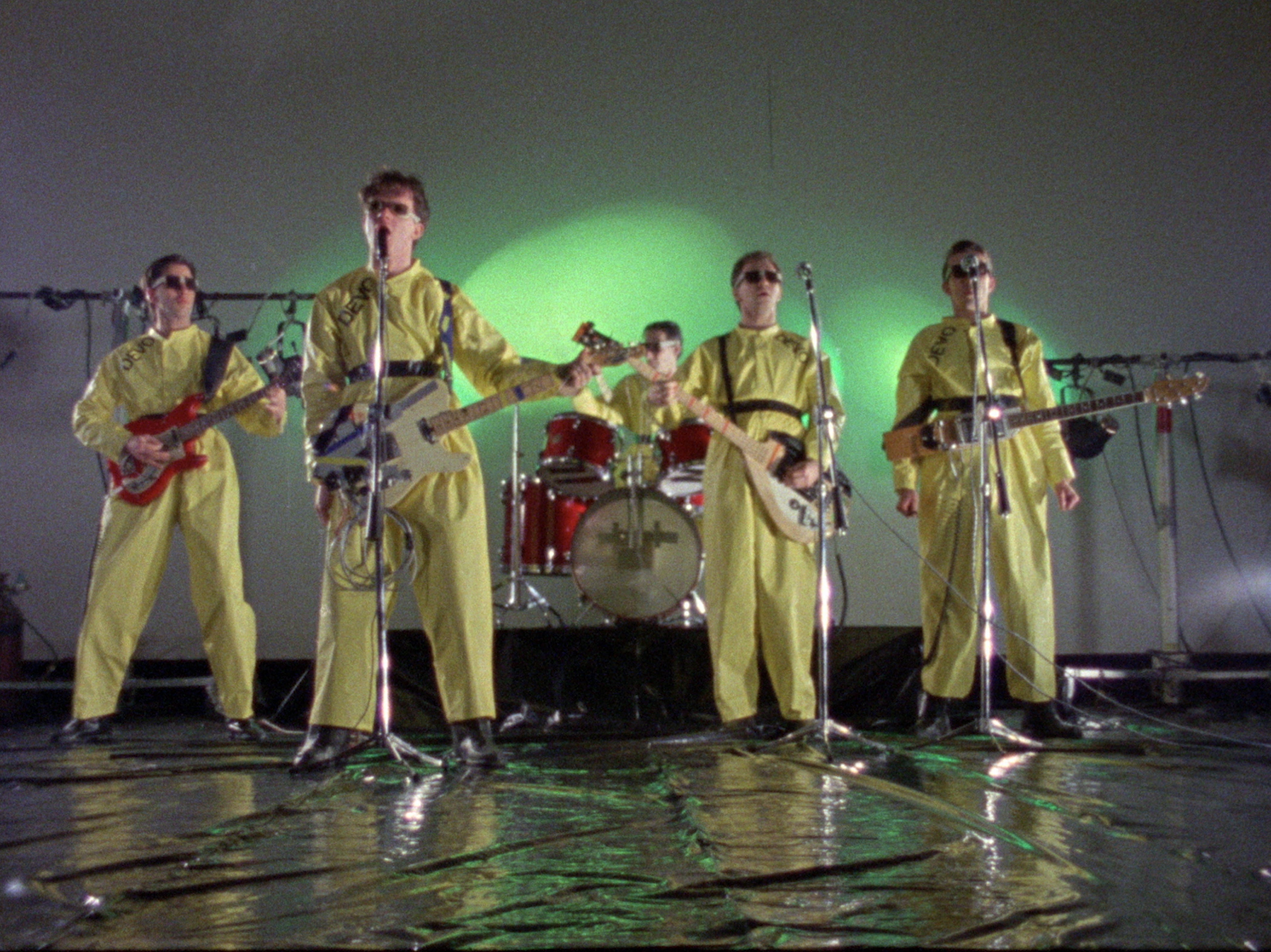
The band Devo’s heyday was slightly before my time, but I generally remember the group as a new wave band from the early 1980s, associated with the early days of MTV, whose biggest songs were “Whip It” and that “yea yea yea yeah yeah” tune that played for large chunks of Martin Scorsese’s Wolf of Wall Street.
I know they were led by Mark Mothersbaugh, who went on to do some truly great film composition work, and that they sometimes favored bizarre, futuristic costumes.
Having now watched Devo, a new documentary about the band from prolific filmmaker Chris Smith that just landed on Netflix, more than a year and a half after its Sundance debut, I’m a bit underwhelmed. It’s one of several documentaries from festivals that Netflix recently grabbed in one fell swoop, but most of the others — Sunday Best, I’m Your Venus, and A King Like Me — were much better.
Maybe they were doing a schtick that was ultra-specific for that exact time and doesn’t translate to modern eyes, or maybe you just had to be there. But the impression I got from the film is that his band, while certainly unique, was somewhat insufferable, with both music and an aesthetic that said just about nothing. And there’s nothing in this film that convinced me that they were as intriguing as their reputation suggests.
Mark Mothersbaugh’s post-Devo work was a lot more compelling, whether it was his scoring of Pee-wee’s Playhouse, Wes Anderson’s early films, or that that Hawaiian Punch commercial where he snuck in “sugar is bad for you” as a subliminal message.
Smith has made some important documentaries, most notably American Movie, Jim & Andy: The Great Beyond, and films about the Fyre Festival and Wham! He executive produced Tiger King, and he even has four credits listed since Devo, including Netflix’s outstanding Mr. McMahon series.
The Devo film, though, is a fairly conventional music documentary, featuring lots of archival footage, along with talking head interviews with Mothersbaugh and the surviving members of the band. But what it can’t do is make Devo particularly interesting.
The band’s story is told as follows: They were from Ohio, and most of them attended Kent State. The 1970 shooting there was a formative event for them, and one band member, Jerry Casale, was friend with two of the students killed that day.
The band grabbed onto a theory called “Devolution,” later shortened to Devo. But rather than react to chaotic times with incidendiary political lyrics, their idea was to come at the problem with lots and lots of weirdness, whether that was a unique art rock sound, or offbeat costumes, which for a time involved wearing bowls on their heads.
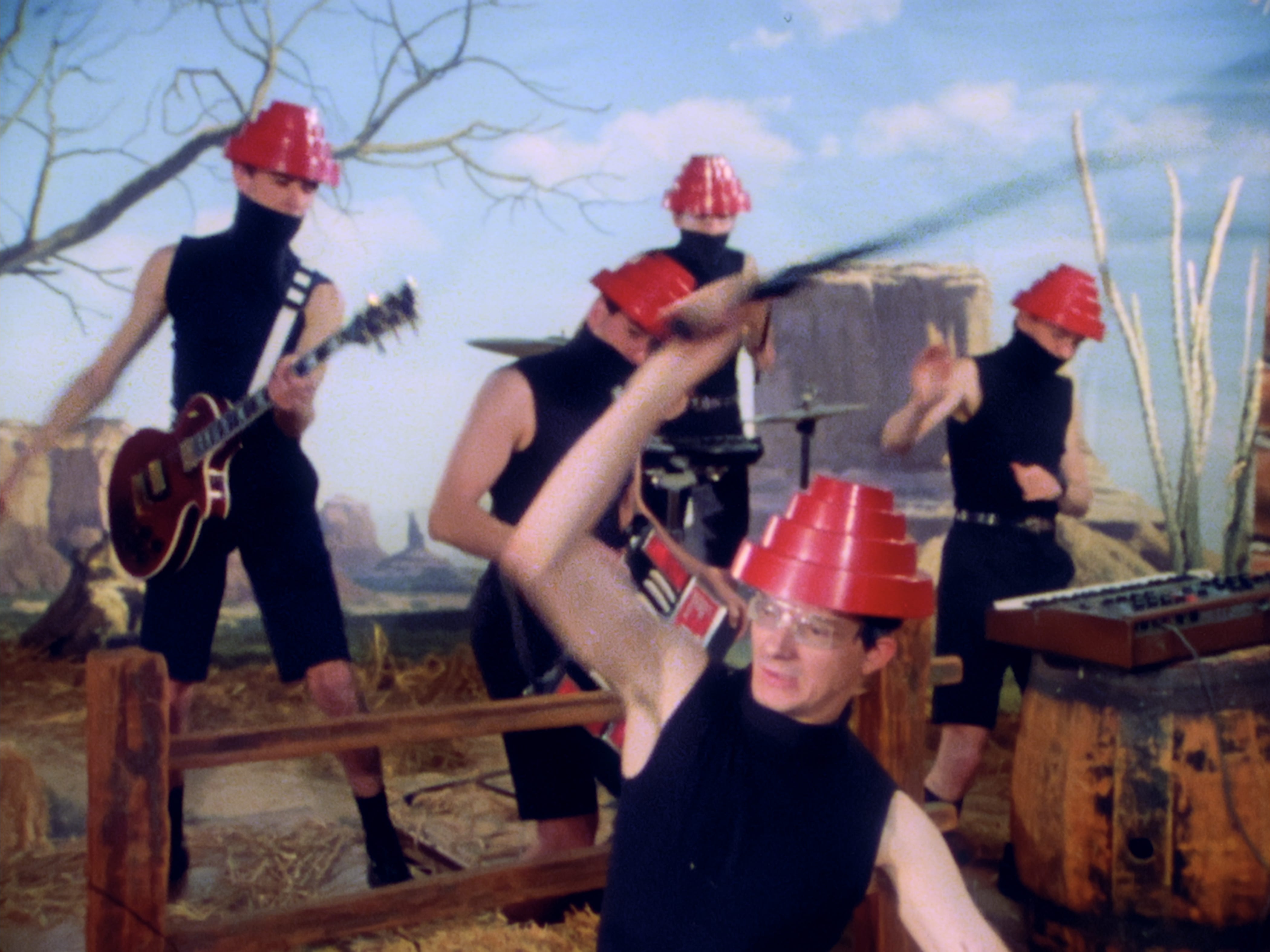
Devo kicked around for much of the ‘70s, before they were championed by David Bowie, and ultimately got a record deal, breaking through big time with “Whip It” in 1980.
Taking the music video revolution seriously, Devo were a staple on early MTV, although they fell out of favor with that video channel after a time.
The band has periodically reunited over the years, including a tour that is in progress as we speak, but the documentary’s narrative ends in around 1985, although Mothersbaugh does talk a bit about his TV and movie work.
His contributions to those early Anderson films include some magical stuff, including the “Sparkplug Minuet” scene, one of my favorite-ever movie moments, and one much shared following Gene Hackman’s passing earlier this year:
I’ve never heard a good story of why Mothersbaugh and Anderson stopped working together. But whatever it is, I just don’t see anything in Devo’s music, or the documentary about them, that’s anywhere close to that level.
The Devo documentary is streaming on Netflix.
Yeah. You didn’t get it, kid. Stick to oasis.
You don't understand their message and significance.