
Documentary selections from the 2026 Atlanta Jewish Film Festival
Reviewing five festival documentaries: 'We Met at Grossinger's,' 'Raoul Wallenberg: Missing Inaction,' 'Kichka: Telling Myself,' 'A Letter to David,' and 'Sapiro v. Ford: The Jew Who Sued Henry Ford'

The annual Atlanta Jewish Film Festival got underway on February 18, and continues through March 15. I’m not in Atlanta, although after three weeks of snow accumulation, I’d certainly like to be.
But thanks to the organizers kindly making screeners available, I’m happy to review some documentary films that are on offer there. I’ve heard nothing about release dates for any of them, but I expect them all to continue festival rollouts in the coming months.
We Met at Grossinger’s
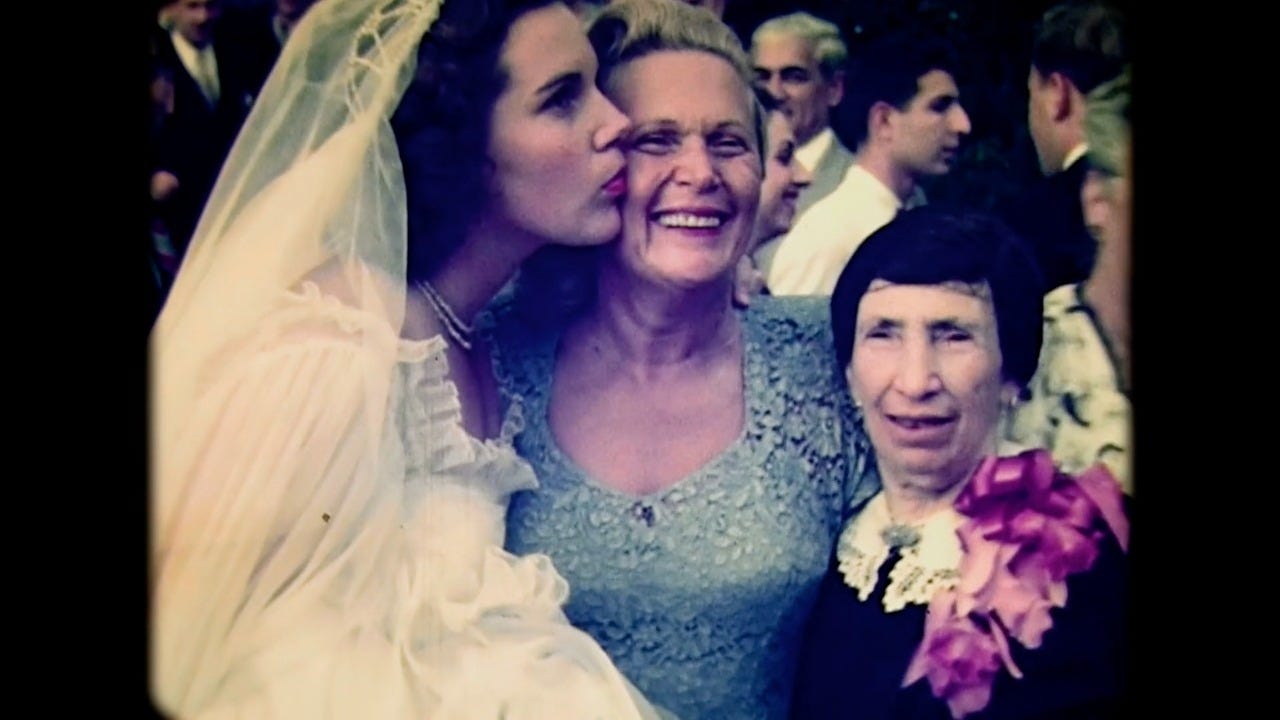
I begin with the closing night film, which will play in March. Directed by Paula Eiselt, who I once interviewed, tells the story of the Grossingers resort.
Grossingers, that Catskills resort of the midcentury, is associated most in the popular imagination with two things: As the frequent home base of multiple generations of Borscht Belt Jewish comedians, and as the inspiration for Kellerman’s, the site of the action in 1987’s Dirty Dancing.
The documentary covers all that and much more, especially the way the resort emerged as a refuge for Jewish families, at a time when Jews were often excluded from other places. Also — and I had no idea about this — it once hosted Jackie Robinson and his family.
It’s a rollicking history that balances the history and interviews with comedians and experts, including 93-year-old legend Joel Grey.
The resort’s comedy history gets its due — Judy Gold tells a tremendous story about being sexually-harassed by the comedy legend Buddy Hackett — as does Dirty Dancing and other pop culture depictions, such The Marvelous Mrs. Maisel.
And there’s also discussion of the decline of the resort and of the Catskills in general- something already hinted at, right in the text in the 1963-set Dirty Dancing. It was a combination of the rise of the counterculture, Jews having other options of where to spend their summers, and the act generally going stale. The resort closed in 1986, but there are now hints of a nostalgia-powered Catskills revival- including an annual Borscht Belt festival, and a Borscht Belt museum.
You don’t have to have ever been there to appreciate the film.
Raoul Wallenberg: Missing Inaction
You likely know Raoul Wallenberg as one of the great heroes of the Holocaust, a Swedish businessman, architect and diplomat who saved the lives of thousands of Jews in Hungary.
This documentary, directed by Brad Rothschild and Brian Mait, is about the lesser-known story of what happened next: Wallenberg disappeared in early 1945, disappearing into Soviet custody, since the Russians likely believed he was an American spy. His fate remains unknown to this day.
The doc, while it doesn’t come close to solving the mystery, is filled with spy intrigue, including the tragic circumstances of what happened to his family.
The film recalls Cold Case Hammarskjöld, another intrigue-filled doc about the disappearance of a prominent figure, one not likely ever to be solved.
Kichka: Telling Myself
There have been lots of fine documentaries lately about Jewish cartoonists, including two about Art Spiegelman and one about Drew Friedman.
This one, directed by Gad Aisen, tells the story of Michel Kichka, the Belgian-Israeli cartoonist who has dedicated much of his career to relating the experience of being a second-generation Holocaust survivor, so there are many echoes of Art Spiegelman’s story.
Kichka, whose work I wasn’t familiar with before now, proves a fascinating documentary subject.
A Letter to David
Tom Shoval’s documentary is one of the more intriguing of the many post-October 7 documentaries. Shoval made the film as a tribute to David Cunio, who at the time was among the hostages taken on October 7, along with his brother.
What makes this one unique is that Cunio has been an actor who had actually starred in Shoval’s 2013 film, Youth- a film that was actually built around a kidnapping.
It’s a low-key, meditative film, featuring Shoval speaking in voice over, and footage of Cunio from both his personal life and his acting work.
Cunio indeed came home alive, but that’s not a spoiler for the film, since it ends before that happened. But the film expertly puts together footage that rhymes with Cunio’s real-life circumstances.
Sapiro v. Ford: The Jew Who Sued Henry Ford
In the 1920s, much like in the 2020s, there was a prominent businessman and owner of a car company who had a prominent sideline in conspiratorial antisemitism. That was Henry Ford, who frequently published Jew-hating screeds in the Dearborn Independent.
Enter Aaron Sapiro, an attorney who successfully sued Ford for libel in 1925, leading to an apology two years later. He also, strangely, was buddies with Al Capone, leading to his own legal trouble in the 1930s.
Directed by Gaylen Ross, it’s a great, unheralded story, one that would make a great feature film. But this film is sort of a documentary and sort of not- it features actor Ben Shenkman, reading Sapiro’s words out loud.
I like Shenkman a lot, but I’m not sure the hybrid format quite works.