
'Sherman’s March' and 'Sátántangó': 10 hours of classic film in one weekend
Thoughts on a weekend of watching very great, very long movies.

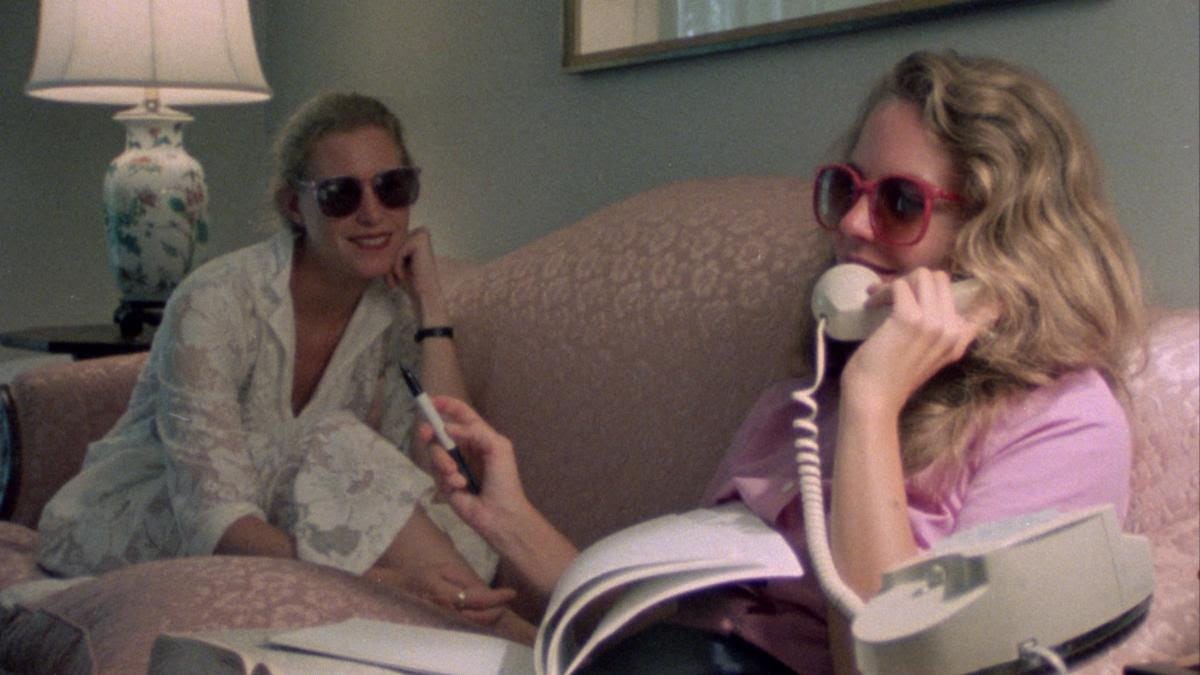
We’re living in an age when many moviegoers are allergic to long films. It’s a very frequent complaint when a movie’s running time exceeds even the two-hour mark, with lots of people making the (very wrong) argument that no movie needs to be more than 90 minutes.
This past weekend, I declared personal war on such sentiments: On Friday night, I watched the 1986 documentary Sherman’s March, and then on Saturday, I headed to the Bryn Mawr Film Institute for my first viewing of Bela Tarr’s Sátántangó, from 1994.
Sherman’s March is three hours long. Sátántangó is more than seven hours. This is the sort of movie commitment I can make when my kids are away for the summer…
Those two movies don’t have much in common, except that they’re both long, they’re both great, and both are available in 4K.
A few years ago, my colleagues with the Critics' Choice Association gave a lifetime achievement award to Ross McElwee at the annual Critics' Choice Documentary Awards. I remember feeling somewhat ashamed that I hadn’t seen any of McElwee’s films.
Ahead of the release of his new film Remake, I thought I’d rectify that by watching the film that’s officially titled Sherman’s March: A Meditation on the Possibility of Romantic Love In the South During an Era of Nuclear Weapons Proliferation, which is McElwee’s magnum opus, marking its 40th anniversary this year. Music Box Films has a new 4K restoration.
The hook is great: It’s a cinéma vérité documentary about McElwee, a native of the South who had been living in the Northeast for a few years, returning to his native region, with the idea of traveling General George Sherman’s path from the Civil War and filming it. But while doing so, he gets continually sidetracked by a series of women with whom he becomes obsessed. Like a lot of the best docs, it ends up being something very different from what was first intended.
What’s especially hilarious is that the film was shot over the course of just five months, meaning McElwee was averaging one romantic obsession every three weeks or so- and this is after going through a breakup back home. The film, perhaps not wanting to kiss and tell, is a bit cagy on the question of how successful those romantic quests were.
The women run the gamit from an aspiring actress to a childhood friend to (my personal favorite) a linguist who is writing her dissertation while living in a bug-ridden tree house. Aside from the romantic quests, he meets some fascinating southern characters, Burt Reynolds, and Burt Reynolds’ aspiring stunt double.
This is an amazing, engaging film. I thought I’d watch the first hour and see the rest the following day, but I stayed up late to watch it all in one sitting. And beyond that, I could tell by watching how many different documentarians over the years have been influenced by it. I’m just wondering why Documentary Now never attempted a parody of it.
Sherman’s March is showing in 4K in New York and Los Angeles, along with the director’s new film Remake, which (among many other things) concerns a doomed long-term effort to remake Sherman’s March as a fiction film. It’s also streaming on Fandor. I’ll be reviewing Remake later this week.
In the time I watched Sátántangó, I could have watched Sherman’s March twice, and still had more than an hour left to go.
Sátántangó is a 439-minute Hungarian film, in black and white, in which scenes play out slowly, often surprisingly so. There’s tragedy, moments of great disturbance — if you’re a cat lover, you should probably never, ever see it — and also scenes that are laugh-out-loud funny.
