
‘Remake’ is a wrenching, personal documentary- one of the year’s best
Ross McElwee’s latest film looks back on the life and death of his son- and re-examines his previous body of work.

Remake, the celebrated documentary filmmaker Ross McElwee’s first new film in 15 years, is purportedly about a long, doomed effort to produce a fictionalized remake of McElwee’s most acclaimed film, 1986’s Sherman’s March.
But in reality, it’s barely about that at all. A lot of the director’s films, Sherman’s March included, have ended up being about something different from what was originally intended.
Remake, though, is sadder than all of the others: It’s mostly about McElwee’s son, Adrian, who died of an overdose in 2016, after years of difficulties- many of which were depicted in McElwee’s previous documentaries.
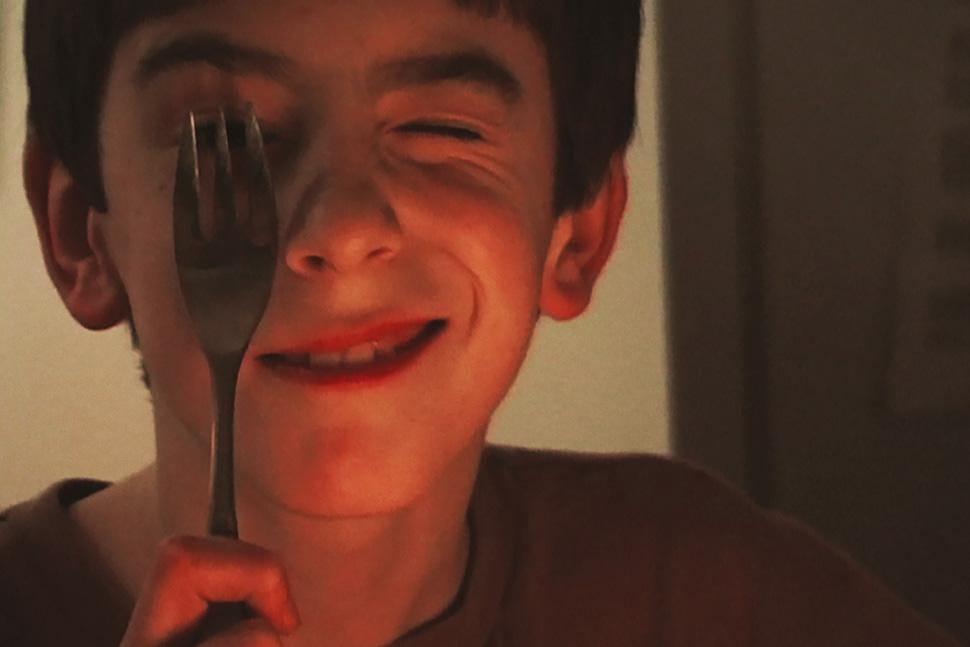
Adrian’s death isn’t really a spoiler, as it’s disclosed very early on in the film, but it’s still pretty devastating, and not only because we’re treated to home movies of him throughout his life, some of them included in past documentaries, as well as footage Adrian shot (related to skiing, mostly) in his own attempts at a filmmaking career. We see Adrian essentially grow up on screen, making it very fortuitous to be writing about both this film and Richard Linklater’s Boyhood in the same week.
“I used to be a filmmaker, I used to be your father,” McElwee states repeatedly at one point, which doubles as the film’s key insight. We truly get the sense that McElwee, on top of the grief, feels wrenching guilt about Adrian’s death, and that the film is his way of working through it.
I approached this film as someone who hasn’t seen most of McElwee’s work and only watched Sherman’s March for the first time last week. Remake hit me pretty hard, especially as a father, but probably would have hit me even harder if I’d spent the last couple of decades exposed to the story of Ross McElwee and his son.
There’s some revisiting of the individual subjects from Sherman’s March, including Wini, the linguist who was one of several women McElwee became smitten with at the time, and Charleen Swansea, the Southern poet and all-time great documentary character, seen in Sherman’s March and other films from the director. When we see her now, she’s suffering from memory loss and has since passed away.
We also learn that McElwee, now in his early 70s, has a new wife who, perhaps wisely, asks not to be filmed, at least not of her face. It seems that after all of that, McElwee has realized that the key to lasting romance is to never film the woman he loves.
As for the attempts to remake Sherman’s March, it’s kind of an odd idea in the first place- great as the 1986 film is, it’s a relatively obscure documentary, of a specific moment that was a long time ago, and a strange contender for the Hollywood meat grinder.
We see McElwee wrestling with the familiar dilemma of whether to go along with the sort of Hollywood project that could be viewed as “selling out,” while everything we see about the remake plans makes it look like the most misbegotten project in history. First, there’s a trailer, scored with Beck’s “Loser” — the absolute wrong song, from the wrong decade — and later the idea of adapting Sherman’s March as a half-hour sitcom. I gather that Michael Cera was at one point involved in efforts to remake Sherman’s March, but he’s not mentioned here.
Mercifully, none of this ever moved forward. Except, we learn at the end, in opera form, which provides something of a moment of catharsis.
One of the best documentaries of the year, Remake feels in many ways like a capstone of Ross McElwee’s career, 40 years after Sherman’s March.